

DOI: https://doi.org/10.64010/EYXN8943
Abstract
Accreditation has traditionally served as a foundation for quality assurance and institutional legitimacy in higher education. In recent years, economic volatility, technological advancements, and evolving workforce demands have significantly altered expectations for colleges and universities. Within business education, accreditation is increasingly recognized not only as a compliance framework but also as a strategic tool for aligning student learning with industry and labor market requirements. This article analyzes the historical development of accreditation, the shift toward outcomes-based standards, and the expanding role of industry engagement in accredited business programs. Utilizing contemporary accreditation literature, ACBSP standards, and workforce alignment research, this study illustrates how accreditation now facilitates student-centered program design, institutional strategy, and ongoing academic improvement in applied business education. The article also addresses challenges and future directions to evaluate how accreditation can remain adaptive in a rapidly changing global business environment.
Introduction
Accreditation has long been recognized as the primary mechanism through which higher education institutions establish public credibility, academic integrity, and degree legitimacy. For much of its history, accreditation operated as a peer-review process emphasizing institutional stability, faculty qualifications, and financial capacity. While these foundational elements remain essential, contemporary stakeholders, including students, employers, policymakers, and industry partners now demand stronger evidence that higher education produces measurable learning outcomes and workforce-relevant business competencies (Eaton, 2012; Ewell, 2015).
Business education operates within an environment characterized by rising tuition costs, demographic shifts, globalization, rapid technological change, and persistent skills gaps across multiple industries. Employers increasingly expect business graduates to demonstrate analytical reasoning, ethical decision-making, technological fluency, and applied problem-solving abilities (Carnevale et al., 2018; National Academies of Sciences, Engineering, and Medicine [NASEM], 2017). As a result, accreditation, particularly outcomes-oriented business accreditation such as that advanced by the Accreditation Council for Business Schools and Programs (ACBSP) has evolved beyond its historical compliance function to serve as a strategic alignment system connecting student learning, institutional effectiveness, and labor market relevance.
While accreditation debates are often framed within U.S. higher education policy, similar quality assurance transformations are occurring globally. OECD data indicate sustained expansion in tertiary enrollment and cross-border student mobility, intensifying demands for credential comparability and workforce portability across jurisdictions. The Bologna Process in Europe, national quality assurance agencies in Asia-Pacific regions, and transnational education partnerships across Africa and Latin America reflect converging expectations for outcomes transparency, employer engagement, and competency validation. Within this increasingly interconnected environment, business accreditation frameworks serve not only domestic accountability functions but also international signaling roles that support credential recognition, global workforce mobility, and cross-border institutional partnerships.
Purpose and Contribution to Business Education Scholarship
This paper examines the transition of accreditation from a compliance-oriented quality assurance model to a strategic framework that aligns student needs, industry expectations, and institutional mission within business education. It contributes to the business education literature by positioning accreditation as an active driver of instructional relevance, curricular innovation, and workforce readiness, rather than as a static external review requirement.
Historical Foundations of Accreditation
Accreditation in the United States emerged in the late nineteenth and early twentieth centuries as a voluntary, nongovernmental system designed to address concerns over inconsistent academic standards and the proliferation of unregulated institutions (Brittingham, 2009). Early accreditation efforts were regional in nature and focused on standardizing credit transfer, defining degree requirements, and ensuring institutional stability. The primary objective was to protect students and the public from fraudulent or substandard institutions while promoting academic legitimacy.
Two broad categories of accreditation developed: institutional accreditation and specialized or programmatic accreditation. Institutional accreditation assessed the overall quality of colleges and universities, while specialized accreditation evaluated professional programs such as business, nursing, engineering, and education. Throughout much of the twentieth century, both forms emphasized faculty credentials, governance structures, student admission standards, and financial solvency (Brittingham, 2009; Eaton, 2012).
This compliance-oriented approach played a crucial role in establishing public trust in American higher education. However, it was primarily input driven and internally focused, with institutions demonstrating quality through documentation of resources and processes rather than direct evidence of student learning or workforce outcomes. As higher education expanded and diversified after World War II, the limitations of this model became more apparent.
Transition to Outcomes-Based Accreditation
By the late twentieth century, rising public accountability pressures and demands for greater transparency prompted a paradigmatic shift in accreditation philosophy. Policymakers and the public increasingly questioned whether traditional input measures adequately demonstrated educational effectiveness. In response, accrediting agencies began emphasizing outcomes-based assessment and institutional effectiveness (Ewell, 2009; Kuh et al., 2015).
Outcomes-based accreditation requires institutions to articulate clear learning outcomes, systematically assess student achievement, and demonstrate how assessment findings inform program improvement. Assurance-of-learning standards became central across many professional accreditors, particularly within business, healthcare, and engineering disciplines (AACSB, 2020; ABET, 2023; ACBSP, 2022).
This transformation redefined accreditation as a system for continuous improvement rather than a periodic compliance exercise. Institutions are now required to engage in ongoing cycles of planning, assessment, evaluation, and refinement. In this context, data-driven decision-making and performance metrics serve as primary evidence of program quality and effectiveness.
Accreditation and Alignment with Student Needs
Modern accreditation standards explicitly require institutions to demonstrate that academic programs are designed around student learning and success. Student progression, retention, completion, and post-graduate outcomes now serve as core indicators of institutional effectiveness (CHEA, 2021; Kuh et al., 2015).
Accreditation supports student alignment through curriculum coherence, outcomes mapping, and structured academic pathways. Programs must show that learning objectives are scaffolded across courses to promote progressive skill development. Accrediting bodies also evaluate academic advising systems, learning support services, and career preparation infrastructure as essential components of student success.
Experiential learning is now a central expectation in accreditation. Internships, practicums, clinical placements, applied research, and project-based learning are increasingly integrated into accredited curricula to enhance student engagement and workforce preparation (Kolb, 2015; NASEM, 2017). Student feedback and assessment outcomes are required to inform ongoing program refinement. Collectively, these mechanisms ensure that accreditation remains fundamentally student-centered.
Figure 1 Accreditation-Student Alignment
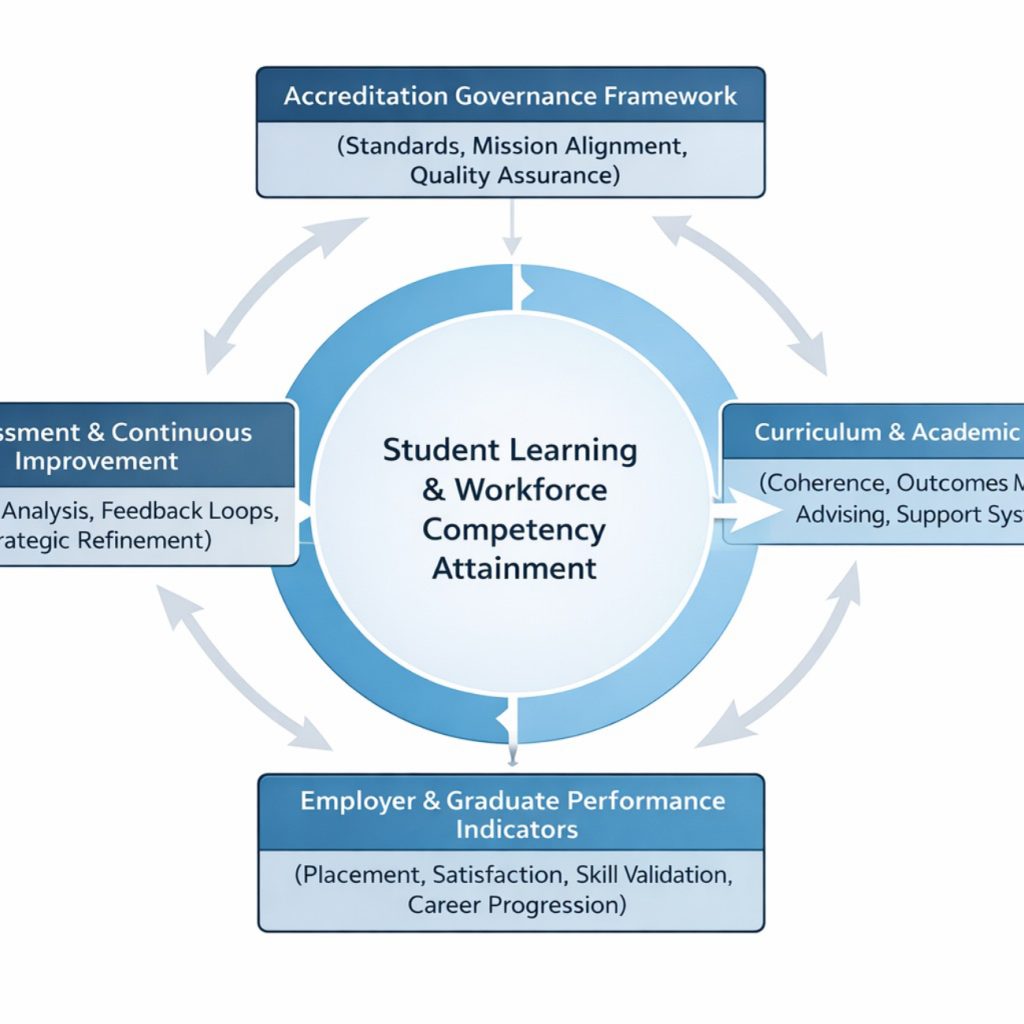
Figure 1 conceptualizes accreditation as a student-centered alignment system rather than a linear compliance process. At the core of the framework are measurable student learning outcomes, surrounded by interconnected systems including advising infrastructure, experiential learning integration, employer validation, and post-graduate performance indicators. The model illustrates how accreditation embeds feedback loops linking assessment evidence to curricular redesign, student support enhancement, and strategic planning. In this architecture, student success metrics become both accountability indicators and drivers of institutional improvement.
Alignment With Industry and Workforce Expectations
Perhaps the most significant evolution of modern business accreditation is the formal integration of labor market relevance and employer engagement into quality assurance systems. Contemporary accreditation frameworks, particularly those advanced by the Accreditation Council for Business Schools and Programs (ACBSP), explicitly emphasize teaching excellence, industry-linked curriculum, and systematic employer input as core components of program quality (ACBSP, 2022). Accredited business programs are required to demonstrate structured use of industry advisory boards, employer surveys, internship supervisor feedback, and labor market analytics as mechanisms for ensuring that curriculum and learning outcomes remain aligned with evolving workforce needs.
This shift reflects broader transformations in the relationship between higher education and the labor market. Employers increasingly demand graduates who are not only theoretically grounded but also capable of applying knowledge in complex organizational contexts. As a result, accreditation has become a key institutional mechanism for formalizing employer engagement within academic governance structures. Through accreditation standards, employer input is no longer informal or episodic but institutionalized through documented advisory processes, curricular review cycles, and continuous improvement systems (CHEA, 2021).
Industry advisory boards provide one of the most direct channels through which workforce expectations shape academic programming. These boards typically consist of executives, managers, entrepreneurs, and industry specialists who represent regional, national, and global business sectors. Their role extends beyond symbolic consultation to substantive participation in curriculum review, program redesign, and competency validation. In fields such as business analytics, supply chain management, entrepreneurship, cybersecurity, and financial services, advisory board members offer critical insights into emerging technologies, regulatory environments, and skill demands that may not yet be fully reflected in academic literature or textbooks.
Accredited business programs must demonstrate how advisory board recommendations directly inform curricular updates and learning outcome refinement. For example, the rapid growth of data analytics and artificial intelligence has prompted many business programs to integrate programming, data visualization, and predictive modeling into core curricula based on advisory board guidance. Similarly, cybersecurity advisory input has driven the integration of risk management, regulatory compliance, and information assurance competencies across multiple business disciplines. Accreditation thus ensures that curriculum remains developmentally aligned with real-time market transformations rather than lagging behind industry change (ACBSP, 2022; Kelchen, 2018).
Employer engagement through internships and applied learning supervision further strengthens workforce alignment. Internship supervisors provide structured evaluations of student performance across dimensions such as professionalism, communication, teamwork, technical competence, and ethical behavior. These evaluations generate external validation data that complement traditional academic assessment measures. Accrediting bodies require institutions to demonstrate how internship feedback is aggregated, analyzed, and used to inform curriculum and instructional improvement. This feedback loop ensures that student learning outcomes are not assessed solely through academic artifacts but also through performance in authentic professional environments (Kolb, 2015; NASEM, 2017).
Beyond advisory boards and internships, employer surveys and graduate outcome tracking now serve as essential tools for demonstrating workforce relevance in accreditation reviews. Surveys assessing employer satisfaction with graduate preparedness, skill adequacy, and onboarding performance provide critical external performance indicators. When systematically collected and analyzed, these data illuminate gaps between curriculum intent and workplace expectations. Accrediting agencies require institutions to document how such feedback informs curricular redesign, pedagogical modifications, and faculty development initiatives (CHEA, 2021).
Labor market analytics further strengthen accreditation’s workforce alignment function. Many accredited business programs now integrate data from sources such as the U.S. Bureau of Labor Statistics, state workforce agencies, and commercial labor market analytics platforms into strategic planning and program development. These data inform decisions related to program launch, program expansion, and curriculum specialization. Enrollment management strategies increasingly rely on documented workforce demand rather than anecdotal employer preferences, reinforcing accreditation’s role as a bridge between higher education and economic development systems.
From an employer perspective, business accreditation functions as a market signal that reduces information asymmetry in recruitment and hiring decisions. ACBSP-accredited status communicates that graduates possess competencies aligned with professional expectations in management, accounting, marketing, operations, and entrepreneurship (Carnevale et al., 2018). In competitive labor markets, employers rely on accreditation as a proxy for educational rigor, curriculum currency, and performance accountability. This signaling effect lowers recruitment risk, shortens onboarding timelines, and enhances employer confidence in graduate preparedness.
The signaling function of accreditation extends beyond individual employers to broader labor market ecosystems. Accredited programs are more likely to be recognized by professional associations, credentialing bodies, and governmental agencies as legitimate pipelines for workforce development. As a result, accreditation strengthens institutional positioning within regional and global economic systems. Business schools with accredited status often experience enhanced employer partnerships, expanded internship pipelines, and increased visibility among industry stakeholders, reinforcing bidirectional value creation between education and employment.
Accreditation also facilitates alignment between business education and professional certification pathways. Many business disciplines intersect with licensure and credentialing systems in areas such as accounting, financial planning, project management, supply chain management, and human resources. Accredited programs frequently align curriculum with the knowledge domains and competency frameworks embedded within these certification standards. This alignment enhances student credential portability and reduces barriers to professional entry. Accreditation thus supports not only degree attainment but also lifelong professional mobility across evolving career trajectories (Carnevale et al., 2018; NASEM, 2017).
Faculty engagement with industry constitutes another critical dimension of workforce alignment under accreditation. ACBSP standards emphasize the importance of professionally qualified faculty who maintain active engagement in consulting, industry research, entrepreneurship, and professional practice. These engagements serve as conduits through which emerging industry knowledge is infused into classroom instruction. Faculty who participate in advisory boards, corporate partnerships, professional associations, and applied research initiatives contribute directly to curriculum currency and instructional relevance. Accreditation thus integrates faculty professional engagement into the formal quality assurance architecture rather than treating it as ancillary activity (ACBSP, 2022).
The integration of workforce expectations into assurance-of-learning systems further institutionalizes alignment. Learning outcome frameworks increasingly incorporate applied competencies such as strategic decision-making, ethical leadership, data-driven analysis, cross-functional collaboration, and digital fluency. Direct assessment instruments—including capstone projects, business simulations, client-based consulting deliverables, and certification-aligned examinations—verify student mastery of workforce-relevant competencies. Indirect measures, such as employer satisfaction surveys and alumni career trajectory studies, further triangulate outcome evidence. Accreditation reviewers evaluate both types of data and the documented improvement actions derived from them (Kuh et al., 2015).
Accreditation transforms workforce alignment from an aspirational objective into a documented performance system. Institutions are required to provide empirical evidence that graduates possess market-valued competencies, rather than merely asserting industry relevance. Continuous improvement plans must explicitly connect curriculum reform and instructional redesign to employer feedback and labor market trends. Across accreditation cycles, institutions are expected to demonstrate measurable improvements in workforce outcomes, reinforcing accreditation’s developmental role.
Figure 2
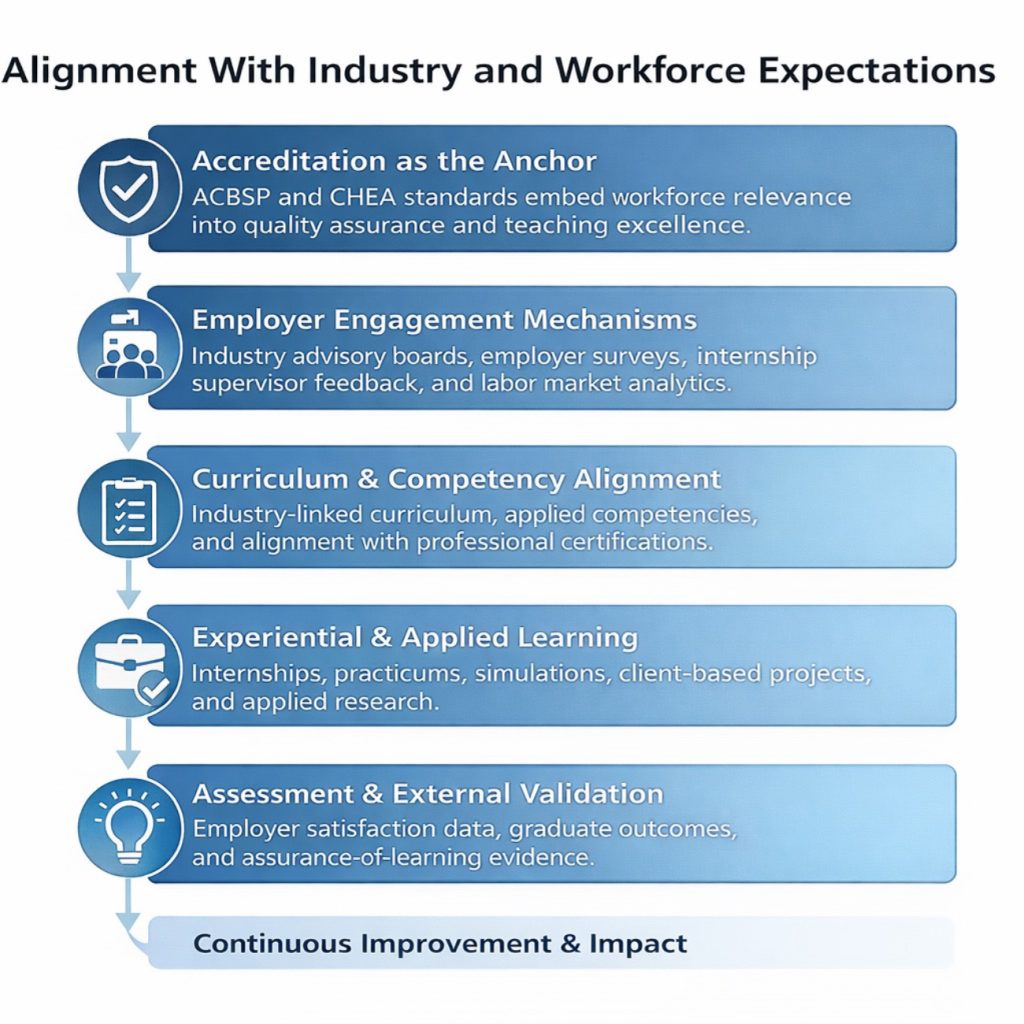
Figure 2 expands the alignment model by situating accreditation within broader workforce and governance ecosystems. The figure demonstrates how employer advisory boards, labor market analytics, faculty professional engagement, and strategic resource allocation intersect within accreditation-driven performance systems. Rather than operating independently, these components form an integrated governance structure in which workforce expectations influence curriculum design, faculty development, and institutional investment decisions. This systems perspective reinforces the argument that accreditation functions as strategic infrastructure rather than episodic review.
Importantly, accreditation also encourages institutions to balance regional workforce needs with global business competencies. As globalization reshapes labor markets, business graduates must navigate cross-cultural communication, international supply chains, regulatory variation, and global financial systems. Accreditation standards increasingly emphasize global perspectives, ethical leadership, and strategic adaptability as essential graduate attributes. Advisory board composition often reflects this globalization through multinational corporate representation, enhancing curriculum internationalization and intercultural competency development.
Alignment with industry and workforce expectations is now a defining feature of modern business accreditation. Through structured employer engagement, advisory governance, applied learning supervision, labor market analytics, faculty professional involvement, and outcomes-based assessment, accreditation operationalizes workforce responsiveness within academic quality systems. ACBSP accreditation, in particular, institutionalizes these mechanisms through its mission-driven standards and continuous improvement philosophy. By embedding workforce alignment into assurance-of-learning and strategic governance processes, accreditation strengthens the education-to-employment pipeline, enhances employer confidence, and reinforces the economic relevance of business education (ACBSP, 2022; Carnevale et al., 2018; CHEA, 2021; Kuh et al., 2015; NASEM, 2017).
Accreditation as a Strategic Institutional Tool
Within contemporary business schools, accreditation now functions not merely as an external quality assurance requirement but as a central driver of institutional strategy and organizational performance. ACBSP standards require explicit linkage among institutional mission, strategic planning, student learning outcomes, and resource allocation processes (Accreditation Council for Business Schools and Programs [ACBSP], 2022). This integration positions accreditation as a governance mechanism that aligns academic quality with long-term institutional sustainability. Rather than serving as an episodic compliance activity, accreditation increasingly operates as a continuous strategic management system embedded within institutional planning and decision-making structures.
ACBSP’s mission-driven accreditation philosophy requires institutions to articulate how business programs advance broader university goals related to access, workforce development, economic impact, and student success. Strategic plans are now routinely mapped to accreditation standards, assurance-of-learning outcomes, and key performance indicators (KPIs). Through this alignment, accreditation evidence directly informs enrollment management strategies, program portfolio decisions, market positioning, and institutional branding. Business schools increasingly rely on accreditation data to justify investments in instructional technology, faculty staffing, student support services, and industry partnerships (Gaston & Eaton, 2014; Kelchen, 2018).
One of the most visible strategic impacts of accreditation is its role in enrollment strategy and program mix optimization. Institutions face mounting demographic pressures, intensified competition from online providers, and shifting student demand toward high-return, career-focused degrees. Accreditation requires that new programs be supported by documented market demand, qualified faculty resources, and sustainable assessment systems. As a result, business schools use accreditation frameworks to evaluate program viability in areas such as business analytics, healthcare administration, fintech, cybersecurity management, project management, and entrepreneurship. Accreditation thus acts as a risk-mitigation tool by ensuring that program expansion is grounded in workforce data and institutional capacity rather than short-term enrollment trends (Kelchen, 2018).
Faculty deployment and workload allocation represent another critical strategic lever shaped by accreditation. Faculty qualification standards require business programs to maintain sufficient numbers of academically and professionally qualified instructors who remain current in both scholarship and professional practice (ACBSP, 2022). These standards influence recruitment strategies, credentialing policies, workload models, and professional development investment. Institutions must strategically balance teaching, scholarship, service, and professional engagement expectations while maintaining faculty sufficiency ratios across disciplines. In applied business programs, professional credibility is particularly essential, as students and employers alike expect instruction grounded in current industry practice. Accreditation thus aligns faculty systems with both instructional quality assurance and labor market relevance.
Faculty development is also framed strategically through accreditation. Continuous improvement standards require documented evidence that institutions support faculty currency through professional development funding, research support, certifications, consulting engagement, and pedagogical training. These investments are increasingly linked to strategic priorities such as online program expansion, industry-embedded curriculum, experiential learning integration, and emerging technology adoption. Accreditation review processes frequently catalyze enhancements to faculty mentoring systems, performance evaluation models, and scholarship expectations, strengthening long-term instructional capacity and institutional reputation (Gaston & Eaton, 2014).
Financial planning and budget prioritization are likewise influenced by accreditation-driven evidence. Resource allocation decisions must be explicitly aligned with mission fulfillment and student learning improvement under ACBSP standards. Budget proposals increasingly reference accreditation self-study findings, assessment gaps, enrollment performance, and workforce demand projections. For example, investments in data analytics laboratories, enterprise resource planning (ERP) software, financial trading platforms, and cybersecurity simulation environments are often justified through accreditation-linked learning outcome improvement and employer engagement requirements. In this way, accreditation functions as a financial governance instrument that ties academic investment directly to performance accountability (Kelchen, 2018).
Accreditation also strengthens horizontal alignment across academic and administrative units. Business schools must demonstrate coordination with institutional research offices, enrollment management, information technology services, career services, and industry partnership offices. Assessment systems require data integration across these units, fostering a culture of shared responsibility for student success and workforce outcomes. This cross-functional alignment reduces organizational silos and enhances institutional coherence, particularly in complex multi-campus or multi-modal delivery environments.
Market responsiveness represents another strategic dimension of accreditation. In rapidly evolving economic conditions, institutions must adapt quickly to changes in employer skill requirements, regulatory frameworks, and technological disruption. Accreditation provides a structured yet adaptable framework for responding to these shifts without compromising academic rigor. By embedding continuous review and employer input into curriculum governance, accredited business programs are better positioned to revise learning outcomes, update course content, and redesign degree pathways in response to real-time labor market signals (Council for Higher Education Accreditation [CHEA], 2021).
Accreditation further supports strategic differentiation and institutional branding. In crowded higher education markets, accredited status enhances institutional credibility and competitive positioning among students, employers, and policy stakeholders. ACBSP accreditation signals a commitment to teaching excellence, applied learning, and continuous improvement rather than purely research-intensive prestige. For regional and access-oriented institutions, this mission-aligned accreditation model provides strategic differentiation within the broader business education landscape (ACBSP, 2022). Accreditation thus becomes both a quality assurance mechanism and a reputational asset supporting student recruitment and employer trust.
The strategic value of accreditation is also evident in partnerships with government agencies, workforce development organizations, and economic development councils. Accredited business programs are frequently positioned as preferred partners in grant initiatives, public-private partnerships, and regional workforce pipelines. Because accreditation verifies learning outcome rigor, assessment credibility, and industry alignment, external stakeholders view accredited institutions as lower-risk collaborators in talent development initiatives. This positioning enhances institutional access to external funding, employer networks, and applied research opportunities.
Importantly, accreditation also supports long-term institutional resilience. Higher education institutions face volatile enrollment patterns, funding uncertainty, technological disruption, and changing public perceptions of degree value. Accreditation provides a stabilizing governance framework that anchors institutional decision-making in documented performance evidence rather than reactive policy shifts. Continuous improvement models embedded within accreditation encourage proactive adaptation rather than crisis-driven change (Ewell, 2015). Over multiple accreditation cycles, institutions that fully integrate accreditation into strategic planning typically demonstrate greater stability in student outcomes, curricular coherence, and workforce alignment.
Business accreditation also plays a critical role in strategic risk management. Compliance with accreditation standards mitigates regulatory risk, protects federal financial aid eligibility, and ensures alignment with state authorization and licensure requirements. From a fiduciary governance perspective, accreditation serves as an independent validation mechanism for boards of trustees and senior leadership. Accreditation evidence functions as a form of institutional due diligence, demonstrating responsible stewardship of academic quality, student outcomes, and public trust.
From a change management perspective, accreditation often serves as a catalyst for strategic transformation. Self-study processes require institutions to critically examine mission drift, curriculum relevance, assessment effectiveness, and resource sufficiency. These reflective processes frequently surface structural inefficiencies, outdated program offerings, and gaps in student support systems. When aligned with executive leadership and shared governance structures, accreditation reviews can accelerate organizational learning and strategic renewal rather than reinforcing bureaucratic inertia (Gaston & Eaton, 2014).
Accreditation has evolved into a foundational institutional strategy tool within business education. Through explicit alignment of mission, assessment, faculty systems, financial planning, and workforce engagement, ACBSP accreditation integrates academic quality assurance into the core of organizational governance. It informs enrollment strategy, program mix optimization, faculty deployment, and budget prioritization while enhancing institutional credibility and market differentiation. By embedding continuous improvement within strategic planning cycles, accreditation strengthens institutional adaptability, resilience, and long-term sustainability in an increasingly competitive global higher education environment (ACBSP, 2022; CHEA, 2021; Ewell, 2015; Kelchen, 2018).
Innovation and Continuous Improvement Through Accreditation
Although accreditation was once criticized for being resistant to change and overly compliance focused, contemporary standards increasingly enable innovation in educational delivery and institutional performance. Modern accrediting frameworks, such as those established by the Accreditation Council for Business Schools and Programs (ACBSP), explicitly support innovation through flexible instructional models, outcomes-based assessment, and continuous improvement systems grounded in data-driven decision-making (ACBSP, 2022; Fain, 2020; Kelchen, 2018). Rather than constraining innovation, accreditation now provides a structured environment for institutions to experiment with new pedagogies, technologies, and credentialing models while maintaining quality assurance and public accountability.
One of the most visible manifestations of accreditation-supported innovation is the rapid expansion of online and hybrid education. Advances in learning management systems, digital content delivery platforms, and virtual collaboration tools have transformed business education delivery modalities. Accredited programs now routinely offer fully online, hybrid, and accelerated formats to meet the needs of working adults, military learners, and geographically dispersed student populations. Accreditation standards require that learning outcomes, instructional rigor, and assessment integrity remain equivalent across delivery formats. This equivalency expectation has strengthened the quality of online education by ensuring that innovation in modality does not compromise academic standards (Fain, 2020; Kelchen, 2018).
Competency-based education (CBE) represents another innovation increasingly supported through accreditation. CBE shifts the focus of instruction from time-based course completion to demonstrated mastery of clearly defined competencies. Business programs adopting CBE models align learning outcomes directly with workforce skills in areas such as data analysis, project management, leadership, and financial literacy. Accreditation provides the governance framework necessary to validate competency frameworks, assessment instruments, and credit equivalencies within CBE structures. Through outcomes verification and assurance-of-learning processes, accreditation safeguards against dilution of academic rigor while enabling flexible, student-centered learning pathways.
Micro-credentials and stackable certificates further illustrate accreditation’s expanding innovation role. As employers seek rapid upskilling in areas such as cybersecurity, business analytics, digital marketing, and supply chain optimization, institutions are developing short-form, industry-aligned credentials that complement traditional degree programs. Accreditation standards increasingly accommodate these innovations by allowing institutions to embed micro-credentials within accredited degree pathways, ensuring coherence between short-term skill validation and long-term academic progression. This integration enhances student employability, facilitates lifelong learning, and strengthens institutional responsiveness to workforce volatility (Fain, 2020; Kelchen, 2018).
Innovation under accreditation is not limited to instructional delivery models; it also encompasses pedagogical design and assessment practice. Experiential learning pedagogies—such as simulations, client-based consulting projects, entrepreneurship incubators, and applied capstone experiences—are now central to many accredited business programs. These pedagogies leverage technology-enabled simulations, enterprise software platforms, and real-time market data to replicate authentic professional environments. Accreditation supports such innovation by requiring that experiential learning outcomes be systematically assessed and linked to program-level learning objectives. This accountability ensures that innovative teaching strategies are not merely engaging but demonstrably effective in advancing student learning (Kolb, 2015; NASEM, 2017).
Continuous improvement remains the core organizing principle of modern accreditation. Institutions must demonstrate systematic feedback loops in which assessment results inform curriculum redesign, pedagogical refinement, and strategic planning. Under ACBSP standards, assurance-of-learning systems require the use of multiple direct and indirect assessment measures, longitudinal data tracking, and documented improvement actions (ACBSP, 2022). These requirements institutionalize innovation by embedding experimentation and refinement within formal governance processes rather than leaving innovation to isolated individual initiatives.
Learning analytics has emerged as a critical enabler of continuous improvement in accredited institutions. Business programs now leverage data from learning management systems, student information systems, and assessment platforms to monitor student engagement, academic progression, and learning outcome attainment in real time. Predictive analytics models identify at-risk students early in the academic lifecycle, enabling targeted interventions through advising, tutoring, and supplemental instruction. Accreditation validates these analytics-driven interventions by requiring documentation of their effectiveness and integration into broader student success strategies (Kuh et al., 2015).
Digital assessment platforms have further strengthened the precision and scalability of accreditation-driven improvement efforts. Rubric-based assessment tools, e-portfolio systems, and automated scoring platforms allow faculty to collect and analyze large volumes of learning outcome data with greater efficiency and reliability. These tools support triangulation across multiple assessment points and instructional modalities, enhancing the credibility of accreditation evidence. Moreover, digital assessment dashboards facilitate transparent reporting to institutional leadership, advisory boards, and accrediting bodies, fostering a culture of evidence-based innovation and accountability.
Institutional research (IR) infrastructure plays an increasingly strategic role in continuous improvement under accreditation. IR offices now function as central analytic hubs that integrate enrollment trends, student success metrics, workforce outcomes, and assessment results into comprehensive performance reports. Accreditation self-studies routinely rely on IR-generated dashboards to demonstrate progress on strategic goals, learning outcome attainment, and resource effectiveness. This integration strengthens the alignment between academic innovation and institutional planning while ensuring that experimental initiatives are evaluated through rigorous performance metrics (Ewell, 2015; Kuh et al., 2015).
From a faculty development perspective, accreditation catalyzes pedagogical innovation through structured professional learning systems. Institutions must demonstrate that faculty are supported in adopting new instructional technologies, assessment methodologies, inclusive pedagogies, and industry-aligned teaching practices. Professional development funding, instructional design partnerships, teaching innovation grants, and learning communities increasingly operate within accreditation-framed improvement cycles. As a result, innovation becomes an institution-wide capacity rather than the responsibility of isolated early adopters.
Accreditation also supports organizational innovation in governance and decision-making processes. Continuous improvement requirements encourage decentralized experimentation combined with centralized evaluation. Academic units are empowered to pilot new course formats, assessment strategies, and delivery models, while institutional leadership ensures that these innovations align with mission, accreditation standards, and fiscal sustainability. This balance between autonomy and accountability allows institutions to remain agile without sacrificing coherence.
Importantly, accreditation-driven continuous improvement promotes not only incremental change but also transformational innovation. Through multi-year assessment cycles and systematic program review, institutions periodically reexamine fundamental assumptions about curriculum structure, degree pathways, and workforce alignment. These reflective processes often lead to significant program redesign, interdisciplinary integration, and reallocation of institutional resources toward emerging fields with high societal and economic impact.
Critics of accreditation have historically argued that external review processes inhibit creativity by imposing standardized expectations. However, contemporary accreditation models increasingly emphasize principles of mission differentiation, contextual adaptation, and evidence-based flexibility. Institutions are evaluated not against uniform program templates but against their own stated missions, strategic priorities, and learning outcome frameworks. This approach allows innovation to flourish within a bounded quality assurance system rather than being constrained by rigid prescriptive standards (Gaston & Eaton, 2014; Kelchen, 2018).
The global expansion of business education further amplifies the need for accreditation-supported innovation. As institutions operate across borders, delivery modalities, and regulatory environments, accreditation provides a portable quality verification mechanism that enables innovation while maintaining international credibility. Cross-border partnerships, joint-degree programs, and virtual exchange initiatives increasingly rely on accreditation alignment to ensure academic equivalency and credential recognition.
In sum, innovation and continuous improvement are no longer peripheral outcomes of accreditation but foundational elements of contemporary quality assurance systems. Through support for online and hybrid delivery, competency-based education, micro-credentials, experiential learning, learning analytics, digital assessment, and institutional research integration, accreditation now actively enables pedagogical, technological, and organizational innovation. Continuous improvement cycles embedded within accreditation ensure that innovation is systematically evaluated, scaled, and refined over time. ACBSP’s mission-driven, outcomes-focused accreditation framework exemplifies this evolution by institutionalizing innovation within academic governance while preserving instructional rigor and workforce relevance (ACBSP, 2022; Fain, 2020; Kelchen, 2018; Kuh et al., 2015; NASEM, 2017).
Challenges and Limitations
Despite its strategic value, accreditation presents significant challenges. The administrative demands of data collection, reporting, and self-study preparation remain considerable. Smaller institutions and emerging programs frequently encounter resource constraints in maintaining rigorous accreditation practices.
Time lag constitutes another structural challenge. Workforce needs change rapidly, whereas accreditation cycles typically follow multiyear schedules. Excessive standardization can constrain institutional differentiation and limit pedagogical experimentation. Additionally, institutions often struggle to ensure that assessment processes serve as authentic improvement mechanisms rather than mere compliance exercises.
Future Directions for Accreditation and Workforce Alignment
Future accreditation models will increasingly emphasize competency-based education (CBE), stackable credentials, and employer-embedded validation processes as dominant mechanisms for strengthening alignment between higher education and the evolving global workforce. As technological change accelerates the pace of skill obsolescence and reshapes occupational structures, traditional time-based degree models alone are no longer sufficient to meet labor market demands. Accreditation systems are therefore shifting toward more flexible, outcomes-driven structures that verify what students can demonstrably do rather than how long they spend in a classroom (Kelchen, 2018; NASEM, 2017).
Competency-based education represents one of the most significant future trajectories for workforce-aligned accreditation. CBE models organize curriculum around measurable knowledge, skills, and abilities directly aligned with industry-defined competencies. In accredited business programs, these competencies increasingly include data analytics, digital literacy, ethical decision-making, project management, financial reasoning, and cross-functional collaboration. Accreditation will play a central role in validating competency frameworks, ensuring the reliability of performance-based assessments, and protecting the integrity of credit equivalency across institutions. As CBE expands, accreditors such as ACBSP will be required to refine assurance-of-learning expectations to accommodate nontraditional pacing, personalized learning pathways, and mastery-based progression while maintaining academic rigor and comparability.
Stackable credentials and micro-credentials will further reshape accreditation’s alignment with workforce development. Employers increasingly require continuous reskilling rather than one-time degree completion. Short-form credentials in areas such as cybersecurity, business analytics, supply chain optimization, fintech, digital marketing, and project management allow learners to rapidly acquire labor market–relevant skills while maintaining pathways toward full degree attainment. Accreditation will increasingly serve as the quality gatekeeper for these modular learning units, ensuring that stackable credentials maintain coherence, transferability, and alignment with long-term academic and professional standards (Fain, 2020; Kelchen, 2018). For business education, this evolution positions accreditation not only as a validator of degree programs but also as a verifier of lifelong learning ecosystems.
Employer-embedded validation processes will also assume greater prominence in future accreditation frameworks. These models integrate direct employer evaluation into learning outcome verification through co-designed assessments, industry-sponsored capstones, certification-aligned examinations, and supervised applied projects. Rather than serving only as advisory participants, employers increasingly function as co-assessors of student competency. Accreditation will play a critical role in formalizing these partnerships, ensuring that employer-embedded assessments meet psychometric standards of reliability and validity while remaining aligned with academic learning objectives. This integration will further reduce gaps between academic preparation and professional performance (CHEA, 2021; Kuh et al., 2015).
Real-time labor market analytics will become a foundational input to accreditation-driven curricular governance. Traditionally, accreditation relied on periodic labor market studies, employer surveys, and advisory board feedback conducted on multiyear cycles. In contrast, emerging accreditation models increasingly leverage real-time analytics derived from large-scale employment databases, job posting aggregators, and workforce intelligence platforms. These tools allow institutions to monitor emerging skill demands, wage premiums, credential requirements, and regional employment trends with unprecedented precision. Accreditation processes will increasingly require institutions to demonstrate systematic use of these analytics in program approval, curriculum redesign, enrollment forecasting, and assessment planning (Kelchen, 2018).
As data integration expands, accreditation will serve as a mediator between predictive workforce analytics and academic governance. Institutions will be expected not only to collect labor market data but also to demonstrate how such data inform learning outcome revisions, course sequencing, instructional investments, and faculty development priorities. In this way, accreditation will shift from retrospective validation to proactive workforce alignment, positioning accreditors as partners in strategic labor market responsiveness rather than solely as evaluators of historical performance.
Global workforce mobility will further reshape the future of accreditation. As supply chains, financial markets, and digital enterprises become increasingly transnational, business graduates must operate across legal, cultural, and economic boundaries. Credential portability and international recognition of qualifications will therefore assume heightened importance. Accreditation systems will be required to strengthen cross-border equivalency frameworks, mutual recognition agreements, and international quality benchmarks to support global talent mobility. ACBSP’s international expansion already reflects this trend, and future accreditation models will likely place greater emphasis on global learning outcomes, intercultural competency, and international employer validation.
Trust and transparency will remain foundational to accreditation’s future legitimacy. As alternative credential providers, corporate universities, and nontraditional education platforms proliferate, stakeholders will increasingly rely on accreditation as an external signal of educational credibility. The future role of accreditation will involve not only verifying academic quality but also protecting students, employers, and policymakers from credential inflation, misaligned training programs, and unverified skill claims. Public accountability, data transparency, and outcome reporting requirements are therefore likely to intensify within future accreditation frameworks (CHEA, 2021; Eaton, 2012).
Technological advances in artificial intelligence (AI), learning analytics, and adaptive assessment will further transform accreditation practice. AI-enabled systems can already analyze student learning patterns, automate feedback, and personalize instruction at scale. In the future, accreditation will be required to establish ethical and methodological standards governing the use of such technologies in learning assessment and credential verification. Accreditors will increasingly evaluate not only whether technology is used but whether it is used responsibly, transparently, and in ways that genuinely enhance learning and workforce readiness.
Faculty roles will also continue to evolve within future accreditation models. As instructional delivery becomes more modular, data-driven, and industry-integrated, faculty will increasingly function as learning designers, assessment architects, and industry liaisons in addition to traditional teaching and scholarship roles. Accreditation standards will likely expand expectations related to faculty industry engagement, interdisciplinary collaboration, instructional innovation, and continuous upskilling. These shifts will require institutions to rethink workload models, promotion frameworks, and professional development systems to ensure long-term faculty sustainability within workforce-aligned educational structures.
From a strategic perspective, future accreditation models will increasingly integrate directly with regional and national economic development systems. Business schools will be positioned not merely as educational providers but as core infrastructure within workforce pipelines, innovation ecosystems, and entrepreneurial networks. Accreditation will validate an institution’s ability to contribute to workforce resilience, regional competitiveness, and economic mobility. Public–private partnerships, talent development consortia, and employer–education coalitions will likely become standard components of accredited business education ecosystems.
Importantly, the future of accreditation and workforce alignment will demand greater agility in accreditation review cycles and reporting mechanisms. Traditional multiyear review models may be supplemented with continuous digital reporting dashboards, real-time outcome monitoring, and adaptive compliance protocols. This transformation will allow accreditation to keep pace with rapidly shifting labor market conditions without sacrificing rigor or due process.
Implications for Institutions, Students, and Employers
For institutional leaders, accreditation must be treated as a strategic asset rather than merely a regulatory obligation. When leveraged effectively, accreditation provides a structured governance framework that strengthens mission alignment, guides academic decision-making, and enhances institutional credibility. Through accreditation-driven assessment and continuous improvement systems, leaders gain access to actionable performance data that inform enrollment strategy, resource allocation, program portfolio management, and workforce responsiveness (ACBSP, 2022; Ewell, 2015). Rather than functioning as a periodic compliance exercise, accreditation becomes a continuous planning instrument that supports long-term institutional sustainability and market positioning.
Faculty members benefit from accreditation through clearer curricular frameworks, strengthened assessment infrastructure, and enhanced professional development support. Assurance-of-learning processes provide faculty with systematic feedback on student performance, allowing instructors to refine pedagogy, redesign courses, and collaborate across disciplines with shared outcome expectations. Accreditation also reinforces the importance of faculty currency in both scholarship and professional practice, particularly in applied business disciplines where industry relevance is essential. Structured engagement with industry advisory boards and employer partners further strengthens instructional relevance and provides faculty with ongoing exposure to emerging professional trends. These mechanisms collectively enhance instructional quality while fostering a culture of reflective teaching and innovation.
Students represent the primary beneficiaries of accreditation’s student-centered orientation. Accredited programs emphasize coherent curriculum design, progressive skill development, experiential learning integration, and continuous academic support. As a result, students gain enhanced educational relevance, improved employment outcomes, and a stronger return on educational investment. Accreditation ensures that learning outcomes are aligned with workforce competencies, that assessment mechanisms measure meaningful performance indicators, and that academic support systems address retention, progression, and completion (CHEA, 2021; Kuh et al., 2015). Students in accredited business programs also benefit from greater employer confidence in their credentials, which strengthens job placement prospects, graduate school admission opportunities, and long-term career mobility.
From a labor market perspective, employers benefit directly from the quality signaling function of accreditation. Accredited programs reduce hiring uncertainty by indicating that graduates have met externally validated educational standards and possess competencies aligned with professional expectations in management, accounting, marketing, analytics, finance, and operations (Carnevale et al., 2018). Employer participation in advisory boards, curriculum review, internships, and applied projects further strengthens the alignment between academic preparation and organizational needs. This collaboration enhances workforce readiness, shortens organizational onboarding time, and reduces costly skill mismatches.
Accreditation also strengthens the education-to-employment pipeline by promoting systematic employer engagement within academic governance structures. Employer feedback loops embedded within accreditation systems ensure that industry partners influence curricular design, learning outcome prioritization, and assessment refinement. This reciprocity benefits employers by allowing them to shape talent development upstream while benefitting institutions through increased graduate employability and employer satisfaction.
Collectively, the implications of accreditation extend beyond individual stakeholder groups to the broader economic and social ecosystem. Institutions enhance reputation, enrollment stability, and workforce relevance. Faculty gain clearer instructional direction and professional integration. Students experience greater academic coherence and labor market mobility. Employers secure a more reliable and aligned talent pipeline. When accreditation is fully integrated into institutional strategy and instructional practice, it operates as a shared quality and alignment infrastructure that benefits higher education, industry, and society alike (ACBSP, 2022; CHEA, 2021; Ewell, 2015).
Conclusion
Accreditation in business education has evolved from a compliance-oriented quality assurance mechanism into a strategic governance architecture that integrates student learning, workforce alignment, and institutional performance. Through outcomes-based assurance systems, structured employer engagement, and continuous improvement cycles, accreditation embeds accountability within the operational core of business schools.
Theoretical contributions of this analysis include reframing accreditation as strategic infrastructure rather than procedural oversight. Practically, the framework provides institutional leaders with a model for leveraging accreditation as a driver of curricular relevance, faculty development, and resource prioritization. From a policy perspective, accreditation serves as a connective mechanism linking higher education performance to workforce competitiveness and economic resilience.
As global labor markets accelerate under technological disruption and cross-border mobility, accreditation systems must continue evolving toward real-time analytics integration, competency validation, and international comparability. Institutions that strategically integrate accreditation into governance, innovation, and workforce ecosystems will be best positioned to navigate the future of business education.
References
- AACSB International. (2020). 2020 guiding principles and standards for business accreditation. AACSB International.
- ABET. (2023). Criteria for accrediting engineering programs, 2023–2024. ABET.
- Accreditation Council for Business Schools and Programs. (2022). Standards and criteria for demonstrating excellence in business education. Accreditation Council for Business Schools and Programs.
- Brittingham, B. (2009). Accreditation in the United States: How did we get to where we are? New Directions for Higher Education, 2009(145), 7–27.
- Carnevale, A. P., Smith, N., & Strohl, J. (2018). Recovery: Job growth and education requirements through 2025. Georgetown University Center on Education and the Workforce.
- Council for Higher Education Accreditation. (2021). The value of accreditation. Council for Higher Education Accreditation.
- Eaton, J. S. (2012). An overview of U.S. accreditation. Council for Higher Education Accreditation.
- Ewell, P. T. (2009). Assessment, accountability, and improvement: Revisiting the tension (NILOA Occasional Paper No. 1). National Institute for Learning Outcomes Assessment.
- Ewell, P. T. (2015). Transforming institutional effectiveness. Change: The Magazine of Higher Learning, 47(1), 18–25.
- Fain, P. (2020). Accrediting online education. Inside Higher Ed.
- Gaston, P. L., & Eaton, J. S. (2014). The changing role of accreditation. Planning for Higher Education, 42(2), 7–19.
- Kelchen, R. (2018). Higher education accountability. Johns Hopkins University Press.
- Kolb, D. A. (2015). Experiential learning: Experience as the source of learning and development (2nd ed.). Pearson.
- Kuh, G. D., Jankowski, N., Ikenberry, S. O., & Kinzie, J. (2015). Knowing what students know and can do: The current state of student learning outcomes assessment in U.S. colleges and universities (NILOA Occasional Paper No. 21). National Institute for Learning Outcomes Assessment.
- National Academies of Sciences, Engineering, and Medicine. (2017). Integrating higher education with workforce development: Proceedings of a workshop. National Academies Press.
- U.S. Department of Education, Office of Postsecondary Education. (2020). Accreditation and student outcomes. U.S. Department of Education.
- Weldy, T. G., & Turnipseed, D. (2010). Assessing and improving learning in business schools: Direct and indirect measures of learning. Journal of Education for Business, 85(5), 268–273.
- Zemsky, R., Shaman, S., & Dowdall, G. (2001). The evolving role of accreditation in a changing educational environment. University of Pennsylvania, Institute for Research on Higher Education.