

DOI: https://doi.org/10.64010/TYEF5884
Abstract
This single case study investigated how human resource professionals (HRPs) in higher education recognize and address employee burnout and its consequences for organizational effectiveness and employee engagement. Directed by organizational theory and the demands-resources theory, the study assessed the challenges HRPs face in alleviating burnout among faculty and staff and assessed the impact of several human resource (HR) interventions. Employing a post-positivist paradigm and a flexible qualitative design, data was collected through interviews, surveys, and document analysis. Thematic analysis exposed four major themes: work-to-pay disparity, behavioral change, reduced efficiency and engagement, and the strategic role of the HR department in addressing burnout. Findings reveal that while HRPs play a crucial role in managing burnout through policy, culture, and support, organizational restrictions and leadership support often limit their success. The study contributes to academic understanding and practical tactics for mitigating burnout in higher education, accentuating the vital nature of preemptive, all-inclusive HR interventions personalized to specific academic organizations.
Burnout in Higher Education: Employee Perceptions and Human Resource Interventions
Burnout, often linked to degeneration in efficiency and reduced employee engagement, poses substantial risks to overall business performance by potentially weakening productivity, reducing employee engagement, and creating broader operational challenges. Burnout has been a prevalent issue in places of higher education, where job demands are increasingly intense among faculty and staff (de Villiers Scheepers et al., 2023; García-Rivera et al., 2022). The problem addressed was the challenges HRPs faced in managing employee burnout within a higher education institution, resulting in low organizational engagement and a decrease in meeting organizational goals.
The purpose of this single case study was to understand the perceptions of burnout among faculty and staff in higher education, related HR interventions, and the ultimate impact on organizational effectiveness and employee engagement at work. Ultimately, this was designed to add to the existing body of knowledge for professional transference regarding burnout in higher education. Burnout was defined in terms of severe mental disadvantage characterized by emotional exhaustion, depersonalization, and disparity in personal accomplishment (Stowe et al., 2023; Uğurlu et al., 2021). This study was then guided by a single research question.
RQ: How can the problem of employee burnout and the resulting organizational inefficiency and employee disengagement be improved via human resource interventions?
The research question for the qualitative case study was crafted to better understand the challenges that have the greatest impact on HRPs’ ability to manage employee burnout. It aligned with the specific problem statement by exploring how HRPs influenced burnout, thereby affecting organizational effectiveness and employee disengagement. This question attempted to gain a better understanding of what organizationalinitiatives did to relieve stress, re-engage employees, and align employees with organizationalstrategy (Biswal & Srivastava, 2022).
Literature Review
Employees who are experiencing burnout tend to emotionally remove themselves from the work they were doing, thus disengaging from their work, leading to boredom and apathy (Abubakar et al., 2022; Biswal & Srivastava, 2022). In many organizations, the concept of burnout is not a priority because the impact is not fully understood, and not always communicated between employees and employers (Bartram et al., 2023; Biswal & Srivastava, 2022; Cohen et al., 2023; Dahiya & Raghuvanshi, 2023). While any professional who works long hours doing mentally strenuous work has the potential for burnout, professionals in the world of academia are especially susceptible to this because of the growing need to cut costs while offering education to more students (Hyatt, 2022; Sarah Saad, 2023; Stowe et al., 2023).
Research describes that while burnout is a concern, there are ways to mitigate the effects of burnout. Effective stress management strategies, such as time management, regular breaks, exercise, and seeking support, were essential to mitigating the effects of burnout (Prentice et al., 2023; Siyum, 2023). Ultimately, HR interventions that highlighted employee well-being led to a healthier, more productive workforce and a more sustainable organizational environment (Stirpe et al., 2022; Taamneh et al., 2022). Organizations that neglected to provide adequate resources faced greater turnover rates, increased absenteeism, and lower determination (Bartram et al., 2023; Biswal & Srivastava, 2022). By focusing on this information, HRPs help identify early signs of burnout and provide timely interventions (Bartram et al., 2023; Dahiya & Raghuvanshi, 2023). Additionally, leaders who were approachable, empathetic, and receptive to employees’ needs could help diminish stress and build a compassionate work environment (Afshan et al., 2021; Budak & Erdal, 2022; Lamprinou et al., 2021).
Methodology
The study utilized a flexible qualitative research design, specifically a single case study approach, to explore the subjective nature of burnout and its management by HRPs. This design is preferred over fixed and mixed methods, as well as other qualitative approaches such as narrative, phenomenology, grounded theory, and ethnography, due to its effectiveness in examining personal experiences and organizational contexts. Triangulation through multiple data sources and methods, including interviews and surveys, was employed to enhance the study’s validity and reliability, addressing the issue of employee burnout comprehensively and accurately (Lindgreen et al., 2021).
The Research Framework
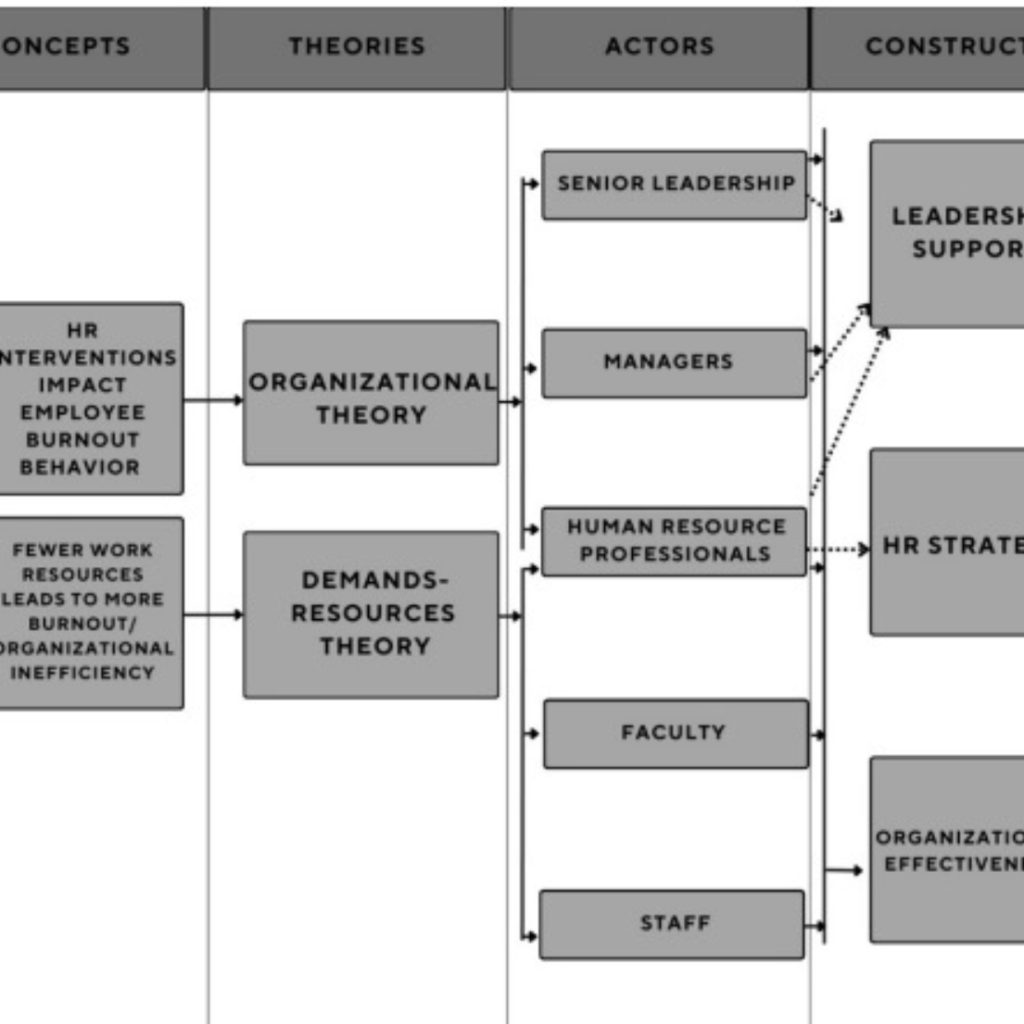
HRPs play a pivotal role in creating interventions that influence employee burnout behavior by establishing policies, procedures, and cultural foundations. The Demands-Resources Theory and the Organizational Theory elucidate how organizational elements of stress and resource availability affect employee burnout, impacting the HRPs’ ability to enact positive interventions. The key actors in this study were HRPs, senior leadership, managers, faculty, and staff. Each of these actors is impacted by burnout, and they contribute to organizational effectiveness. Their interactions reveal essential organizational mechanisms that mediate burnout, guide burnout interventions, and determine the impact of these interventions on institutional outcomes in higher education.
Research Framework Diagram
Figure 1. Research Framework Diagram
Participants
In this study, one diverse group was eligible for participation. This group was called faculty and staff. The individuals known as faculty must hold a teaching position at the university as a tenured professor, adjunct professor, or lecturer (García-Rivera et al., 2022). Their time teaching must exceed one semester to ensure adequate time to possibly experience some level of burnout (Demerouti et al., 2021; Edú-Valsania et al., 2022). Additionally, administrative staff who hold a full-time role in the business office, financial aid office, office of advancement, marketing office, institutional advancement office, admissions office, student life, security, facilities, or any other staff position at the university were included in the participant pool (Lei et al., 2024). The researcher planned to recruit at least 12 faculty participants for interviews and successfully interviewed 12 faculty. Additionally, 24 participants (12 faculty and 12 staff) were sought for surveys. Upon closing the survey, there were 35 surveys, made up of 16 faculty and 19 staff. Their employment at the university needed to exceed 6 months to ensure that they had time to develop opinions and experiences about the university environment, as well as possible burnout intentions (Demerouti et al., 2021; Edú-Valsania et al., 2022). To recruit these participants, the researcher emailed a wide pool of qualifying participants regarding the purpose of the study, inquiring about their willingness to participate. In this email, there was a screening survey to ensure that those who were contacted were both eligible and able to participate.
Population
The university’s workforce is distinct, comprising both faculty and staff members who play pivotal roles in the education of students and organizational operations. The primary population, known as the faculty, is comprised of tenured/full-time professors, adjunct professors, and lecturers, made up of approximately 80 individuals, comprised mostly of Caucasians with a small population of Black, Latino, Asian, and other racial groups. The faculty population is also characterized by being approximately 44% female and 56% male. The secondary population group, known as staff, is made up of a wide range of departmental roles within the university, all of whom possess different talents and responsibilities that contribute to the vital functioning of the university. This group is comprised of approximately 155 individuals, with an approximate 1:1 male-to-female ratio, and race demographics similar to those of the faculty group. Age ranges for both groups vary wildly, from individuals in their early 20s to others in their late 70s. Together, these two populations represent a community of like-minded professionals made up of varied genders, races, and ages.
Data Collection and Analysis
Data Collection
To begin, a small amount of demographic data was collected to determine who was fully eligible to participate in this case study. This demographic data also helped categorize participants into specific group identifiers. The remainder of the data that was collected in this case study was verbal narratives from interviews as primary data and written narratives from surveys and archive data as secondary data. In these interviews and surveys, the goal was to identify the general sentiment of the participants in regard to their experiences of burnout and how they felt HR could support them in avoiding further development of burnout. Additionally, questions were asked to determine which HR interventions employed had been subjectively beneficial in deterring burnout in participants.
Instruments
Interview. This case study utilized an interview guide for primary data collection that involved twelve questions for participants. The interview began with a researcher’s introduction, a re-introduction of the purpose of the study, confidentiality, voluntary participation assurances, and asking for participant consent to proceed. All twelve questions were posed to contribute to answering the research question: How can the problem of employee burnout and the resulting organizational inefficiency and employee disengagement be improved?
Survey Guide. The second instrument utilized in this case study was a formal survey, serving as a tool for triangulation. The survey mirrored the thematic organization of the interview questions. However, unlike the interviews, the survey incorporated additional follow-up questions, totaling 20, to comprehensively address the research question. This approach strengthened triangulation by capturing participants’ individual perspectives through structured, self-reported responses (Naeem et al., 2024; Verma et al., 2023). This survey instrument delivered valuable information on employees’ perceptions regarding the efficacy of HR interventions in easing burnout. It explicitly addressed the research question by investigating how burnout contributes to organizational inefficiency and employee disengagement, while also detecting possible improvements.
Archive Data. The HR department was asked to provide documents stating the percentage of employees who participate in the given programs, as well as the age and gender demographics present. This information would have helped the researcher understand what mitigating factors are currently present and who takes advantage of these mitigating factors (Jung et al., 2023). However, the data requested in this study was not readily available when requested due to a lack of data collection and information system protocols at the institution. Evaluating demographic patterns would have permitted the researcher to ascertain whether certain groups, such as older employees or women, are more likely to engage with these resources and whether targeted interventions are needed (Giancaspro et al., 2023; Jung et al., 2023).
Data Organization
Primarily, in this case, due to the reliance on interviews and surveys, the data was collected by recording digital audio of the interviews and surveys (McNamara, 2024). Each participant was assigned a number before the recording started to ensure that no personal identification information was used in the recordings, as suggested by experts such as Heaton (2021) and Scheytt and Pflüger (2024). The recordings were then transferred to a computer to be transcribed. After transcription, the recording and transcription were stored together using the participant’s identification number. This process ensured that participant responses were objective and confidential.
Member Checking
After the collection of data and cataloging of data were complete, the data underwent member checking. Member checking is the process by which the collected data is presented to participants to allow them to amend any misunderstandings that may be present in the recordings or transcripts (Erdmann & Potthoff, 2023; Lloyd et al., 2024). Member checking allowed the participants to give feedback on the original conversation and kept the researcher from reporting inaccurate information. They were then given a reasonable amount of time to review this data and provide feedback.
Follow-up Interviews
The researcher used voluntary follow-up interviews after the initial analysis and member checking to clarify the findings and better understand the data. Follow-up interviews involved meeting with participants to conduct a second interview (Goyes & Sandberg, 2024; Pascoe Leahy, 2021). This was an opportunity to remind the participants about the information the researcher prompted in the initial interview. Then, clarifying questions were employed to delve deeper into what the responses meant to the participant. Suppose the initial interview questions did not allow for much elaboration. In that case, the follow-up interviews allowed the participants to be open and honest about their lived experiences, giving the participants some additional time to think over the original theme before meeting again to review.
Data Analysis
The following section outlines the analysis procedures that were utilized in the case study. The first sub-section details the initial qualitative analysis that was conducted by the researcher. It involves creating codes for themes and patterns within the data in order to determine commonalities between participant accounts. The second sub-section outlines how triangulation occurred in this study using interviews, surveys, and archival data to properly verify that results are comparably accurate.
Qualitative Analysis
After the data was collected and organized into appropriate folders, it was reviewed by importing it into MAXQDA (Beresford et al., 2022; De Paoli, 2024). Here, the data was coded according to thematic patterns. Examples of codes that were employed in this study were “poor pay/economic stress,” “decrease in performance,” or “supervisor moral support.” Participant quotes were saved to strengthen the findings section.
Analysis for Triangulation
In this study, the three data sources used were interviews, surveys, and institutional documents. Since this was a qualitative study, thematic analysis was used to analyze the data collected. Once themes were established, the different methods of triangulation were compared with the primary data collection to determine if the findings were convergent (similar or identical), complementary (different, but generally similar conclusions), or dissonant (contrasting results).
Bias and Ethical Assurances
Throughout this study, special considerations were upheld to ensure the research was conducted without researcher bias and to ensure that the study was ethical, including bracketing, confidentiality, and consent. Bracketing is a set of qualitative research techniques that aim to remove or mitigate researcher bias within data collection, analysis, and interpretation (Karcher et al., 2024; Thomas & Sohn, 2023). Additionally, when conducting a study, ethical assurances must be considered to ensure the proper treatment of human subjects in a research setting. Special considerations have been made to ensure that respect for persons, beneficence, and justice were upheld. Due to the university’s small size, the name of the university has been kept confidential as a safeguard for the participants involved. Additionally, plans were coordinated to ensure that proper informed consent and Institutional Research Board (IRB) approval were achieved. A policy for confidentiality was established in the prior section. Finally, any conflicts of interest were laid out, and procedures were developed to ensure that conflicts of interest do not interfere with the findings of the study.
Results
This study was conducted using a qualitative single-case study methodology. The target for the number of participants was originally 12 interview participants and 24 survey participants, comprised of at least 12 faculty and 12 staff. The actual number of participants was a total of 48, which included 12 faculty interviews (P1-12) and 35 total surveys (S1-35) with markers for Male Staff (MS), Female Staff (FS), Male Faculty (MF), and Female Faculty (FF), a mix of both faculty (16) and staff (19). All participants were given informed consent, which they signed prior to the survey or interview, and a pre-survey to determine whether they met the criteria for this study. Coding was conducted by a single researcher using an electronic coding software called MAXQDA. A codebook was compiled, and codes were categorized according to relevance. A total of 1,494 comments were coded from the surveys and interviews. These were distilled into 146 unique codes, based on the responses given by the participants.
Throughout this study, participants who were surveyed and interviewed reliably recounted that increasing workloads without equitable pay, support, or resources were large contributing factors to employee burnout, which led to emotional deterioration, changes in behavior, and work disengagement (Afshan et al., 2021; Kruse & Edge, 2023). Despite the similarities between this study and other major studies, a major difference in this study is the researcher’s inclusion of faculty and staff, addressing a gap in the research, which continues to concentrate almost exclusively on faculty burnout (Bartram et al., 2023; Siyum, 2023). It is important to note that many faculty and staff surveyed and interviewed did not recognize the HR department as a player in the overall burnout mitigation process, which will be discussed in depth in the following sections.
Overview of Themes Discovered
This study uncovered a variety of themes related to workplace burnout in higher education. Four primary themes were identified through analysis and codification of the interviews and surveys used to triangulate the data (Bellindo-Garcia et al., 2022; Beresford et al., 2022). The first theme discovered was Work to Pay Disparity, involving how an increased workload does not always equate to an increased salary. The second theme discovered was A Change in Behavior, which discusses people’s emotional and behavioral changes in morale and activity due to burnout (Demerouti et al., 2021; Zia et al., 2023). The third theme discovered was Reduction in Efficiency and Engagement, which addresses how burnout can impact the work that is done and the quality of said work (Bartram et al., 2023; Matos et al., 2022). The fourth and final theme discovered was Primary Strategies for HR Involvement, which discusses the need for a comprehensive HR plan regarding feedback, wellness, communication, and support (Cho et al., 2022; Gabel-Shemueli et al., 2023).
Discussion of Themes
Work to Pay Disparity. The most prevalent comment that was made within this study was the topic of intense individual workload and a corresponding lack of compensatory resources or sufficient support systems (Afshan et al., 2021; Kruse & Edge, 2023). A common thread within this idea is that many participants suggested that certain positions have been eliminated, either by a person who was burnt out and resigned, or the university decided to terminate them. In these scenarios, participants recognized that the institution did not replace those individuals, but rather asked the remaining employees to pick up the burden for little to no pay increase (Bridich, 2021; Gabel-Shemueli et al., 2023). One participant said, “I have accepted being underpaid for my entire tenure here” (S20MS). Another participant, in particular, explained an almost two-decade-long tenure with only three to four pay increases (P2). During this time, the participant did not receive any additional cost-of-living increases to offset the national inflation rates, resulting in a reduced ability to provide for their basic needs.
Regarding other benefits outside of pure monetary compensation, participants described that there was a lack of support from the administration, often stating that it did not feel like the administration really understood what they needed, or simply did not care enough about them as individuals to ask (Harðarson & Magos, 2021; Sokal & Trudel, 2022). Burnout should be an issue that supervisors and the HR department are actively mindful of, and it should be apparent to them when it gets to this level of severity. When it comes to campus well-being initiatives, many of the participants recognized these efforts, but did not feel they were still happening often enough to have any lasting impact on burnout or well-being, as previously these programs were held several times a year, and they no longer exist.
A Change in Behavior. A second prevalent theme in this study relates to how participants recognized either their own or their coworkers’ burnout. The majority of participants discussed that burnout caused them or their coworkers to display a change in behavior. These changes in behavior should be seen as possible early warning signs that burnout is beginning. When this is noticed, HR supervisors and the administration need to take quick and decisive action to preserve the employee (García-Rivera et al., 2022; Zia et al., 2023).
While hard to see externally, many of the participants noticed changes in morale, specifically. A behavior change in morale can present itself in many ways according to these individuals. But most often, it presents as a general negative perception of the work environment, negative work conversations, and increased absenteeism (Hyatt, 2022; Kruse & Edge, 2023). One participant said, “I do often have a sense of dread about going to work” (S30FF). This was a common theme seen in many participants who stated their morale decreased when burnout increased. Other participants noticed that when individuals became significantly stressed to the point of burnout, they began using flexible working benefits such as the ability to work from home or using excessive paid time off (PTO) or sick time (S30FF) (Kariou et al., 2021; Sokal & Trudel, 2022).
A common behavior change noticed by staff in staff surveys was that when coworkers started to experience burn out, they began to be unresponsive to emails and requests for specific information (Gabel-Shemueli et al., 2023; Zeshan et al., 2024). One participant said, “The way I feel at the end of a task would be improved if I wasn’t nagging people to perform basic tasks, needing to do extra items to make up for someone else’s shortcomings” (S17FS). This connects to other themes, as a prominent request from the faculty was for more administrative support, and a common request from the administration was for faculty to communicate and respond to requests.
Reduction in Efficiency and Engagement. A third major theme that was brought up in the interviews and surveys was the idea that when burnout was occurring, participants were unable to produce the highest quality of work, and they did not feel that they could be as productive (Budak & Erdal, 2022; Matos et al., 2022). As the majority of this study focused on faculty, one of the common issues related to poor quality of work had to do with student interaction. One participant said, “I think one of the effects of burnout is that professors… can’t maintain that positive persona that represents the university as it ought to. Your stress or your depression or whatever [it is] kind of affects that interaction” (P2).
While participants recognized the burnout, they acknowledged that the work needed to be done, which led to increased pressure, furthering the burnout cycle (Kariou et al., 2021; Zeshan et al., 2024). One participant said, “I feel like burnout definitely delays productivity. It slows it down tremendously, which could definitely then lead to not meeting goals or barely scraping by to meet goals, especially if we’re talking about goals with time frames like have it done by a certain date. If you’re burnt out, you’re probably struggling to complete something in a timely manner” (P1).
For these participants, as stressors mounted, they noticed that not only did their productivity slow or halt, but they also felt less driven and motivated to want to achieve goals or perform well (García-Rivera et al., 2022; Matos et al., 2022). This loss of motivation eventually became a loss of care for the work altogether (Kruse & Edge, 2023; Zia et al., 2023). One participant said, “It can become a very negative situation where you’re like, why try? . . . Why do I put in the effort if my colleagues don’t care? They’re in the same place that I am. It’s the same thing every semester, and the students don’t care, so why try?” (P5).
Due to the loss of motivation and decrease in productivity, the participants recalled beginning to see the quality of their work drastically reduced. One participant said, “I think that burnout causes an acceptance of mediocrity among individual[s] or by individual performance. There’s a ‘well, that’s the best they can do right now, and it’s going to be good enough’ [attitude]” (P8). This is perpetuated by the idea that the work is never done, so employees begin to feel that if they want to keep up, they have to bring work home with them. One participant said, “Like for me, my job always comes home with me. So then, if I’m not motivated to do that work outside of here, I’m just not going to keep up. You know, [it’s] the same thing about my other faculty. If they’re not motivated to put in that extra effort, then they’re not going to produce a good quality product” (P6). The drastic impact burnout has on work promotes the idea that HR interventions are overwhelmingly needed to address the root issues that lead to burnout (Bartram et al., 2023; Cho et al., 2022).
Primary Strategies for Human Resource Involvement. The fourth key theme that was prevalent in this study was the idea that faculty and staff need significant support to help them achieve the goals of the organization (Gabel-Shemueli et al., 2023; Giancaspro et al., 2023). Participants said, “. . . maybe [we need a] team of people that can minister to the heart needs of faculty and staff, which, to my knowledge, doesn’t exist at the present at all. And then also some part of that team who works with administration and faculty to change the system” (P2); “We need a place to be able to complain. . . Even if you can’t fix the problem, because some problems can’t be fixed, we don’t have the money to fix [it], but at least you’re heard. We need a place to be heard” (P9). What participants in the surveys and interviews did not realize is that they were asking for the same support that a traditional HR department should be providing for the institution. Ultimately, the HR role is a dual responsibility meet the goals and vision of the organization, and support the needs of workers. By mitigating burnout, HR departments are meeting both goals in the same actions (DePorre et al., 2023; Gabel-Shemueli et al., 2023).
Many participants noted a lack of communication across departments, or what is commonly referred to as silo culture (Giancaspro et al., 2023; Kennedy et al., 2022). Participants stated, “It would help morale if we know more about what is going on across the campus” (S7FS); “Building relationships across the campus is very important. We don’t need to isolate ourselves so much by ‘schools’” (S28FF); and “[We need to] break down the ‘silos’ and remove barriers” (S32FF). HR can play a crucial role in this process as representatives of the whole institution, not just their department, by promoting events that will bring faculty and staff closer together, reorienting communication structures, and reiterating the chain of command and open-door policies.
Additionally, an alarming number of participants could not identify resources that they felt were targeting the issue of burnout within the organization. This can lead to two possible conclusions. First, no resources exist. Second, the resources that do exist are not being communicated effectively to faculty and staff. One part of the triangulation in this study was to collect documents that would indicate what benefits and resources are available to faculty and staff. This information is listed in two places. First, there is a limited list of resources listed on the HR page of the institution’s website. Second, a more detailed list is offered in the employee handbook. If it is the case that benefits are not being properly communicated, it may be partially due to the fact that the HR department is not appropriately involved in employee benefit awareness, and therefore does not know whom to communicate resources to.
As for the non-monetary compensation (such as employee appreciation) and HR’s involvement in these matters, participants stated, “I would like to see staff recognized more. . . we have some wonderful staff at [the university] that don’t get recognized for their efforts” (S7FS), “Recognition goes a long way” (S20MS), and “I think when people feel valued, they give their very best” (P7). Finally, considering wellness-based fringe benefits, many participants explained that there had been a wellness program that occurred once per semester in the past, but this wellness program was administered by a fellow faculty member, and when they transitioned out of the university, there was no longer a wellness program. Participants said, “We used to have a wellness program. I would love to see that come back” (P8); “The [former] wellness program did a lot to improve overall morale among coworkers and engage us in friendly competition” (S13MS); “I do wish we had that, like, walking challenge [again], because I’ve actually made several friends at the university from those” (P6); and “I’d like to see an emphasis on health habits again” (S7FS).
Conclusion
This study examined the challenges that HRPs face as they attempt to manage employee burnout at a higher education institution. Utilizing a flexible, qualitative single-case study, the researcher used interviews, surveys, and archival documents to triangulate the data (Bellindo-Garcia et al., 2022; Campbell et al., 2020). Through the study, the researcher found four key themes: Work to Pay Disparity, A Change in Behavior, Reduction in Efficiency and Engagement, and Primary Strategies for Human Resource Involvement. The study found a prominent divide between employees and the HR department, communication breakdowns regarding available resources, and an employee appeal for more support and more structure. In the end, this study emphasizes the consequences of unaddressed or under-addressed burnout (Afshan et al., 2021; Bartram et al., 2023) and highlights how necessary a present and visible HR strategy is in mitigating burnout and advancing organizational objectives (DePorre et al., 2023; Salas-Vallina et al., 2023).
Limitations and Recommendations for Further Study
Although this study covered many groups of participants available at the institution, there are still limitations to be discussed. First, because it is a small university, the demographics of the participants were limited. Many participants reportedly had the same spiritual beliefs, most lived locally in a rural community, and a large percentage of participants were Caucasian. These limitations may have impacted the individual responses and may not have allowed for as much diversity in opinion and burnout predisposition. Second, because the research was conducted during the spring semester, some faculty and staff were hesitant to participate due to large workloads, making scheduling the interviews more challenging. Although it is important to note that if the study had been conducted during the summer break, many faculty and staff would not have been on campus, which also led to limitations in the number of in-person interviews.
There are also opportunities for future researchers to investigate this topic in new ways. As mentioned above, the demographics of the university are more limited, perhaps leading to responses being more consistent with each other. A recommendation for future research would be to survey and interview faculty and staff at multiple universities, especially universities with more diverse participants. Another example of an area that could be investigated further is the function of HR departments in small universities. Future case studies could examine how HRPs view their role in employee wellness under similar circumstances. It may be found that varying sizes, organizational structures, and cultures have a significant impact on how HRPs view their work or how their work is realistically done.
References
- Abubakar, A. M., Rezapouraghdam, H., Behravesh, E., & Megeirhi, H. A. (2022). Burnout or boreout: A meta-analytic review and synthesis of burnout and boreout literature in hospitality and tourism. Journal of Hospitality Marketing & Management, 31(4), 458-503. https://doi.org/10.1080/19368623.2022.1996304
- Afshan, G., Kashif, M., Khanum, F., Khuhro, M. A., & Akram, U. (2021). High involvement work practices often lead to burnout, but thanks to humble leadership. The Journal of Management Development, 40(6), 503-525. https://doi.org/10.1108/JMD-10-2020-0311
- Bartram, T., Cooper, B., Cooke, F. L., & Wang, J. (2023). Thriving in the face of burnout? The effects of wellbeing-oriented HRM on the relationship between workload, burnout, thriving and performance. Employee Relations, 45(5), 1234-1253. https://doi.org/10.1108/ER-06-2022-0273
- Bellindo-Garcia, R., Cruzata-Martinez, A., Ponce Marin, M., & Rejas Borjas, L. (2022). Implicit theories on learning assessment and the use of triangulation as a means of qualitative validity and reliability. Qualitative Report, 27(5), 1276–1300. https://doi.org/10.46743/2160-3715/2022.4231
- Beresford, M., Wutich, A., du Bray, M. V., Ruth, A., Stotts, R., SturtzSreetharan, C., & Brewis, A. (2022). Coding qualitative data at scale: Guidance for large coder teams based on 18 studies. International Journal of Qualitative Methods, 21https://doi.org/10.1177/16094069221075860
- Biswal, K., & Srivastava, K. B. L. (2022). Mindfulness-based practices, psychological capital, burnout and performance anxiety. Development and Learning in Organizations, 36(6), 4-7. https://doi.org/10.1108/DLO-10-2021-0188
- Bridich, S. M. (2021). Approved to fail: A case study of leadership at three new high schools. Journal of Educational Administration, 59(6), 794-810. https://doi.org/10.1108/JEA-03-2021-0058
- Budak, O., & Erdal, N. (2022). The mediating role of burnout syndrome in toxic leadership and job satisfaction in organizations. South East European Journal of Economics and Business, 17(2), 1-17. https://doi.org/10.2478/jeb-2022-0011
- Campbell, R., Goodman-Williams, R., Feeney, H., & Fehler-Cabral, G. (2020). Assessing triangulation across methodologies, methods, and stakeholder groups: The joys, woes, and politics of interpreting convergent and divergent data. The American Journal of Evaluation, 41(1), 125-144. https://doi.org/10.1177/1098214018804195
- Cho, Y., Grenier, R., & Williams, P. (2022). Introduction: Innovation in qualitative research in HRD. European Journal of Training and Development, 46(7/8), 685-692. https://doi.org/10.1108/EJTD-05-2022-0058
- Cohen, C., Pignata, S., Bezak, E., Tie, M., & Childs, J. (2023). Workplace interventions to improve well-being and reduce burnout for nurses, physicians and allied healthcare professionals: A systematic review. BMJ Open, 13(6), e071203. https://doi.org/10.1136/bmjopen-2022-071203
- Dahiya, R., & Raghuvanshi, J. (2023). Do values reflect what is important? Exploring the nexus between work values, work engagement and job burnout. International Journal of Organizational Analysis, 31(5), 1414-1434. https://doi.org/10.1108/IJOA-02-2021-2608
- Demerouti, E., Bakker, A. B., Peeters, M. C. W., & Breevaart, K. (2021). New directions in burnout research. European Journal of Work and Organizational Psychology, 30(5), 686-691. https://doi.org/10.1080/1359432X.2021.1979962
- De Paoli, S. (2024). Further explorations on the use of large language models for thematic analysis. Open-ended prompts, better terminologies and thematic maps. Forum, Qualitative Social Research, 25(3), 46–80. https://doi.org/10.17169/fqs-25.3.4196
- DePorre, A., Banerjee, G., Mitchell, J. D., Brzezinski, M., & Ballard, H. A. (2023). Burnout in medicine: Are we asking the right questions? Permanente Journal, 27(2), 123-129. https://doi.org/10.7812/TPP/23.033
- de Villiers Scheepers, M., Williams, P., Schaffer, V., Grace, A., Walling, C., Campton, J., Hands, K., Fisher, D., Banks, H., Loth, J., & Scheelings, A. (2023). Creating spaces of well-being in academia to mitigate academic burnout: A collaborative auto-ethnography. Qualitative Research Journal, 23(5), 569-587. https://doi.org/10.1108/QRJ-04-2023-0065
- Edú-Valsania, S., Laguía, A., & Moriano, J. A. (2022). Burnout: A review of theory and measurement. International Journal of Environmental Research and Public Health, 19(3), 1780. https://doi.org/10.3390/ijerph19031780
- Erdmann, A., & Potthoff, S. (2023). Decision criteria for the ethically reflected choice of a member check Method in qualitative research: A proposal for discussion. International Journal of Qualitative Methods, 22https://doi.org/10.1177/16094069231177664
- Gabel-Shemueli, R., Tzafrir, S., Rodriguez Perez, B., & Bahamonde Canepa, D. (2023). Being present: A longitudinal study on the role of mindfulness on engagement and burnout in teachers. Academia Revista Latinoamericana de Administración, 36(3), 335-352. https://doi.org/10.1108/ARLA-01-2023-0011
- García-Rivera, B. R., Mendoza-Martínez, I. A., García-Alcaraz, J. L., Olguín-Tiznado, J. E., Camargo Wilson, C., Araníbar, M. F., & García-Alcaraz, P. (2022). Influence of resilience on burnout syndrome of faculty professors. International Journal of Environmental Research and Public Health, 19(2), 910. https://doi.org/10.3390/ijerph19020910
- Giancaspro, M. L., Gemmano, C. G., & Manuti, A. (2023). The art of designing work: Work/family interface as a mediator in the relationship between work design, burnout, and performance. Behavioral Sciences, 13(12), 965. https://doi.org/10.3390/bs13120965
- Goyes, D. R., & Sandberg, S. (2024). Trust, nuance, and care: Advantages and challenges of repeat qualitative interviews. Qualitative Research, 25(2), 330-349. https://doi.org/10.1177/14687941241246159
- Harðarson, A., & Magos, K. (2021). Emotional demands and moral rewards: A story told by fifteen teachers. Scandinavian Journal of Educational Research, 66(7), 1194-1203. https://doi.org/10.1080/00313831.2021.1982766
- Heaton, J. (2021). “Pseudonyms are used throughout”: A footnote, unpacked. Qualitative Inquiry, 28(1), 123–132. https://doi.org/10.1177/10778004211048379
- Hyatt, K. (2022). Stressors in higher education that lead to burnout and solutions to avoid it. Journal of Business and Educational Leadership, 12(1), 110-125. https://search.proquest.com/docview/2697170741
- Jung, F. U., Bodendieck, E., Bleckwenn, M., Hussenoeder, F. S., Luppa, M., & Riedel-Heller, S. G. (2023). Burnout, work engagement and work hours – how physicians’ decision to work less is associated with work-related factors. BMC Health Services Research, 23(1), 157. https://doi.org/10.1186/s12913-023-09161-9
- Karcher, K., McCuaig, J., & King-Hill, S. (2024). (Self-) reflection / reflexivity in sensitive, qualitative research: A scoping review. International Journal of Qualitative Methods, 1–15. https://doi.org/10.1177/16094069241261860
- Kariou, A., Koutsimani, P., Montgomery, A., & Lainidi, O. (2021). Emotional labor and burnout among teachers: A systematic review. International Journal of Environmental Research and Public Health, 18(23), 12760. https://doi.org/10.3390/ijerph182312760
- Kennedy, S. P., McGurr, M. P., & Garewal, K. R. (2022). Manager perspectives on the prevalence, impact, and management of work-related burnout in academic library technical services workers. Library Resources & Technical Services, 66(4), 148. https://doi.org/10.5860/lrts.66n4.148
- Kruse, S., & Edge, K. (2023). Is it just me? The organizational implications of individual and collective burnout in schools. Journal of Educational Administration, 61(3), 272-286. https://doi.org/10.1108/JEA-10-2022-0187
- Lamprinou, V. D. I., Tasoulis, K., & Kravariti, F. (2021). The impact of servant leadership and perceived organisational and supervisor support on job burnout and work–life balance in the era of teleworking and COVID-19. Leadership & Organization Development Journal, 42(7), 1071-1088. https://doi.org/10.1108/LODJ-12-2020-0526
- Lei, M., Alam, G. M., Bashir, K., & Pingping, G. (2024). Does the job performance of academics’ influence burnout and psychological counselling? A comparative analysis amongst high-, average-, low-, and non-performers. BMC Public Health, 24(1), 1-14. https://doi.org/10.1186/s12889-024-19224-z
- Lindgreen, A., Di Benedetto, C. A., & Beverland, M. B. (2021). How to write up case-study methodology sections. Industrial Marketing Management, 96, A7-A10. https://doi.org/10.1016/j.indmarman.2020.04.012
- Lloyd, N., Hyett, N., & Kenny, A. (2024). To member check or not to member check? An evaluation of member checking in an interpretive descriptive study. International Journal of Qualitative Methods, 23, https://doi.org/10.1177/16094069241301383
- Matos, M. d. M., Sharp, J. G., & Iaochite, R. T. (2022). Self-efficacy beliefs as a predictor of quality of life and burnout among university lecturers. Frontiers in Education (Lausanne), 7https://doi.org/10.3389/feduc.2022.887435
- McNamara, C. (2024). Using recorded visual data: Doing online interviews. Social Science Information, 63(2), 193-212. https://doi.org/10.1177/05390184241250178
- Naeem, M., Ozuem, W., Howell, K., & Ranfagni, S. (2024). Demystification and actualisation of data saturation in qualitative research through thematic analysis. International Journal of Qualitative Methods, 23, https://doi.org/10.1177/16094069241229777
- Pascoe Leahy, C. (2021). The afterlife of interviews: explicit ethics and subtle ethics in sensitive or distressing qualitative research. Qualitative Research : QR, 22(5), 777–794. https://doi.org/10.1177/14687941211012924
- Prentice, C., Snell, L., & Sok, P. (2023). Managing burnout from engagement-derived acting strategy. Journal of Service Theory and Practice, 33(4), 577-597. https://doi.org/10.1108/JSTP-07-2022-0144
- Salas-Vallina, A., Herrera, J., & Rofcanin, Y. (2023). Human resource management, quality of patient care and burnout during the pandemic: A job demands-resources approach. Employee Relations, 45(5), 1254-1274. https://doi.org/10.1108/ER-10-2022-0485
- Sarah Saad, H. (2023). Impact of AMO enhancing HR practices in private higher education institutions on academicians’ wellbeing: A conceptual paper. International Journal of Academic Research in Business and Social Sciences, 13(11). https://doi.org/10.6007/IJARBSS/v13-i11/19399
- Scheytt, C., & Pflüger, J. (2024). Conducting qualitative research in organizations ethically: Organizationality as a heuristic to identify ethical challenges. International Journal of Qualitative Methods, 23, https://doi.org/10.1177/16094069241237548
- Siyum, B. A. (2023). University instructors’ burnout: Antecedents and consequences. Journal of Applied Research in Higher Education, 15(4), 1056-1068. https://doi.org/10.1108/JARHE-04-2022-0131
- Sokal, L., & Trudel, L. E. (2022). Demoralization as a form of teacher burnout. McGill Journal of Education, 57(2), 12-30. https://doi.org/10.7202/1106306ar
- Stirpe, L., Profili, S., & Sammarra, A. (2022). Satisfaction with HR practices and employee performance: A moderated mediation model of engagement and health. European Management Journal, 40(2), 295-305. https://doi.org/10.1016/j.emj.2021.06.003
- Stowe, J., Stowe, J., Self, S., Hochanadel, C., & Struble, K. (2023). Burnout in Virginia’s community college adjuncts with relation to gender, age, and number of jobs. Journal of Organizational Psychology, 23(2), 29-57. https://doi.org/10.33423/jop.v23i2.6161
- Taamneh, A. M., Taamneh, M., Alsaad, A., & Al-Okaily, M. (2022). Talent management and academic context: A comparative study of public and private universities. EuroMed Journal of Business, 17(4), 731-751. https://doi.org/10.1108/EMJB-08-2020-0088
- Thomas, S. P., & Sohn, B. K. (2023). From uncomfortable squirm to self-discovery: A phenomenological analysis of the bracketing experience. International Journal of Qualitative Methods, 1–12. https://doi.org/10.1177/16094069231191635
- Uğurlu, Ö., Yildiz, S., Aydin, M., Aydin, T., Kaptan, M., & Wang, J. (2021). Analysis of occupational burnout utilising Maslach inventory: A case study of Turkish male seafarers. Maritime Policy and Management, 48(8), 1124-1137. https://doi.org/10.1080/03088839.2020.1843725
- Verma, S. J., Gulati, P., Dhiman, V. K., & Pandian, J. D. (2023). Rigor and reliability of qualitative research conducted in various languages: Fundamentals and their application.Qualitative Report, 28(3), 960–975. https://doi.org/10.46743/2160-3715/2023.5102
- Zeshan, M., Khatti, S. T., Afridi, F., & de La Villarmois, O. (2024). Control yourself or someone else will control you. Effect of job demands on employee burnout: A perspective from self-regulation theory. International Journal of Organizational Analysis (2005), 32(2), 236-254. https://doi.org/10.1108/IJOA-12-2022-3534
- Zia, M. Q., Decius, J., Naveed, M., Ahmed, S., & Ghauri, S. (2023). Committed, healthy, and engaged? Linking servant leadership and adaptive performance through sequential mediation by job embeddedness and burnout. Journal of Leadership & Organizational Studies, 30(3), 327-340. https://doi.org/10.1177/15480518231158861
Author Note
Austin J. Hinton https://orcid.org/0009-0001-4999-7572
The author has no financial conflicts of interest to disclose. An earlier version of this research was developed as part of an unpublished DBA doctoral project. To enhance readability, the author used Grammarly for grammar and form; the author retains full responsibility for the content and interpretations presented. The author gratefully acknowledges his wife for her patience, support, and proofreading of the manuscript.
Correspondence concerning this article should be addressed to Austin J. Hinton, Hans Hut School of Business, Truett McConnell University, Cleveland, GA 30528, United States. Email: ahinton@truett.edu